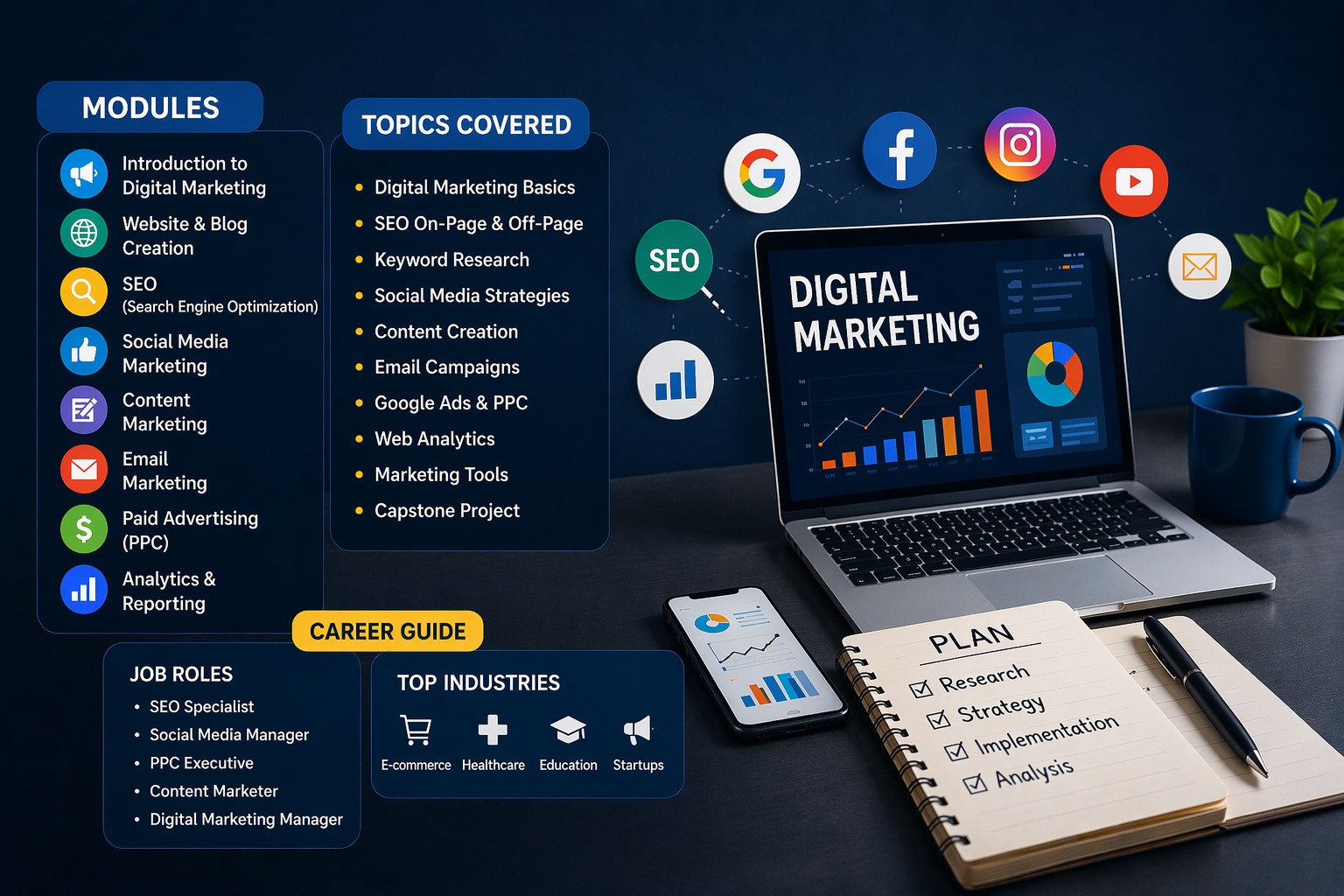
If you’re searching for the digital marketing syllabus, here’s the simple and honest answer first — a complete course in 2026 usually includes SEO, social media marketing, Google Ads, content creation, email marketing, and analytics tools. But just knowing the topics is not enough. What actually matters is how these skills are taught and practiced.
Many beginners feel confused because every institute shows a different syllabus. Some look too technical, some too basic. So in this guide, we’ll break everything down in a practical and easy-to-understand way. By the end, you’ll clearly know what you will learn, how useful it is, and whether this field is right for you.
This guide is also based on real learning approaches followed at Learn Digitally Simply, where the focus is more on practical skills rather than just theory.
What is Digital Marketing? (Simple Explanation)
Digital marketing is simply promoting a product, service, or brand using online platforms.
This can include:
- Google search results
- Social media platforms like Instagram or Facebook
- Emails
- Websites and blogs
Earlier, businesses relied mostly on offline marketing. But now, almost everything is shifting online. That’s why digital marketing has become one of the most in-demand skills today.
Digital Marketing Syllabus (Complete Module Breakdown)
Instead of just listing modules like most blogs do, let’s understand what you actually learn step by step.
1. Introduction to Digital Marketing
This is where your journey starts.
You’ll learn:
- What digital marketing really means
- Different types of digital marketing
- How online customers behave
- Basic marketing concepts
This module is simple but important because it builds your foundation.
2. Website Planning & Development (WordPress)
Before marketing anything, you need a website.
In this module, you’ll learn:
- How to buy a domain and hosting
- How to build a website using WordPress
- Basic design and layout
- Creating landing pages
The good part is — you don’t need coding for this.
3. Search Engine Optimization (SEO)
SEO is one of the most important parts of the digital marketing syllabus.
Here, you learn how to rank a website on Google without ads.
Topics include:
- Keyword research
- On-page SEO
- Off-page SEO
- Technical SEO basics
In real learning, you don’t just study this — you actually try to rank content.
4. Google Ads (Search Engine Marketing)
This is the paid side of digital marketing.
You’ll learn:
- How Google Ads works
- Running search ads
- Display ads and YouTube ads
- Budget planning and targeting
This module helps you generate quick traffic and leads.
5. Social Media Marketing
This is one of the most interesting modules for most learners.
You’ll learn:
- Instagram growth strategies
- Facebook marketing
- Content planning
- Reels and engagement techniques
But one thing to remember — social media works only with consistency and creativity.
6. Content Marketing
Content is everywhere in digital marketing.
In this module:
- Blog writing
- Basic copywriting
- Content strategy
- SEO content basics
Good content plays a major role in both SEO and branding.
7. Email Marketing
This is often underrated but very useful.
You’ll learn:
- How email campaigns work
- Creating email lists
- Automation basics
- Customer engagement
This is mainly used for customer retention and repeat business.
8. Web Analytics
This is where you understand data.
You’ll learn:
- How to track website visitors
- Which pages are performing
- Where traffic is coming from
- Conversion tracking
Tools like Google Analytics are used here.
9. E-commerce Marketing
If you want to work with online stores, this module is important.
It includes:
- Shopify basics
- Product promotions
- Running ads for e-commerce
- Improving conversions
10. AI in Digital Marketing (2026 Update)
This is a newer addition to most courses.
You’ll learn:
- AI tools for content creation
- Automation tools
- Basic usage of AI in marketing
It’s not too technical but definitely useful.
Tools Covered in Digital Marketing Course
A good digital marketing syllabus is incomplete without tools.
You will typically work with:
- Google Analytics
- Google Ads
- SEMrush or Ahrefs
- Canva
- Email marketing tools
Learning tools is what makes you job-ready.
Real Example: How You Actually Use These Skills
Let’s say you learn SEO.
In a practical course, you won’t just read about it. You’ll:
- Find keywords
- Write content
- Optimize pages
- Try to rank on Google
Similarly, in ads:
- You create campaigns
- Set budgets
- Test results
This is what real digital marketing learning looks like.
Course Duration (Realistic View)
Let’s be honest here.
- 2–3 months → basic understanding
- 4–6 months → practical learning
- 6+ months → strong confidence
If you’re serious about a career, go for at least 4–6 months.
Digital Marketing Course Fees in India (2026)
Fees depend on the institute and level.
- Basic courses: ₹15,000 – ₹25,000
- Advanced courses: ₹30,000 – ₹60,000
- Premium institutes: ₹80,000+
But higher fees don’t always mean better learning.
What Most Institutes Don’t Tell You
This is important.
Many institutes show a long digital marketing syllabus, but:
- They focus more on theory
- Tools are not explained properly
- No real projects are given
So always check for practical learning.
Skills You Actually Gain
After completing the digital marketing syllabus, you don’t just learn topics.
You gain real skills like:
- Keyword research
- Running ads
- Writing content
- Data analysis
These skills are what help you earn.
Mistakes Beginners Should Avoid
Many beginners make these mistakes:
- Only watching videos without practice
- Ignoring SEO basics
- Jumping directly to ads
- Not learning tools properly
Avoiding these mistakes can save a lot of time.
Who Should Learn Digital Marketing?
This field is open for almost everyone.
You can learn digital marketing if you are:
- A student
- Looking for a job
- A freelancer
- A business owner
No technical background is required.
Career Opportunities After Digital Marketing
Once you complete the syllabus, you can go for roles like:
- SEO Executive
- Social Media Manager
- Google Ads Specialist
- Content Marketer
Or you can start freelancing and work with clients.
Freelancing & Business Opportunities
One of the best things about digital marketing is flexibility.
You can:
- Work from home
- Start freelancing
- Build your own agency
- Grow your own business
This makes it a strong career option.
How to Choose the Right Digital Marketing Course
Before selecting a course, check:
- Updated syllabus (2026)
- Practical training
- Tools included
- Mentorship or support
Platforms like Learn Digitally Simply focus more on practical skills, which is important if you want real results.
Future Scope of Digital Marketing
Digital marketing is growing fast.
- More businesses are going online
- Demand for skilled professionals is increasing
- Freelancing opportunities are rising
So learning this skill now can be a smart decision.
FAQs – Digital Marketing Syllabus
What is included in digital marketing syllabus?
It includes SEO, social media marketing, Google Ads, content marketing, email marketing, and analytics.
How long does it take to learn digital marketing?
Usually 3 to 6 months with proper practice.
Is digital marketing a good career in 2026?
Yes, it has strong demand and good earning potential.
Do I need coding for digital marketing?
No, coding is not required.
Which tools are important in digital marketing?
Google Analytics, Google Ads, SEMrush, and Canva are commonly used.
Final Thoughts
The digital marketing syllabus in 2026 is more practical than ever.
It’s not just about learning topics — it’s about:
- Building skills
- Using tools
- Practicing regularly
If you focus on learning properly and apply what you learn, digital marketing can open many career opportunities for you.